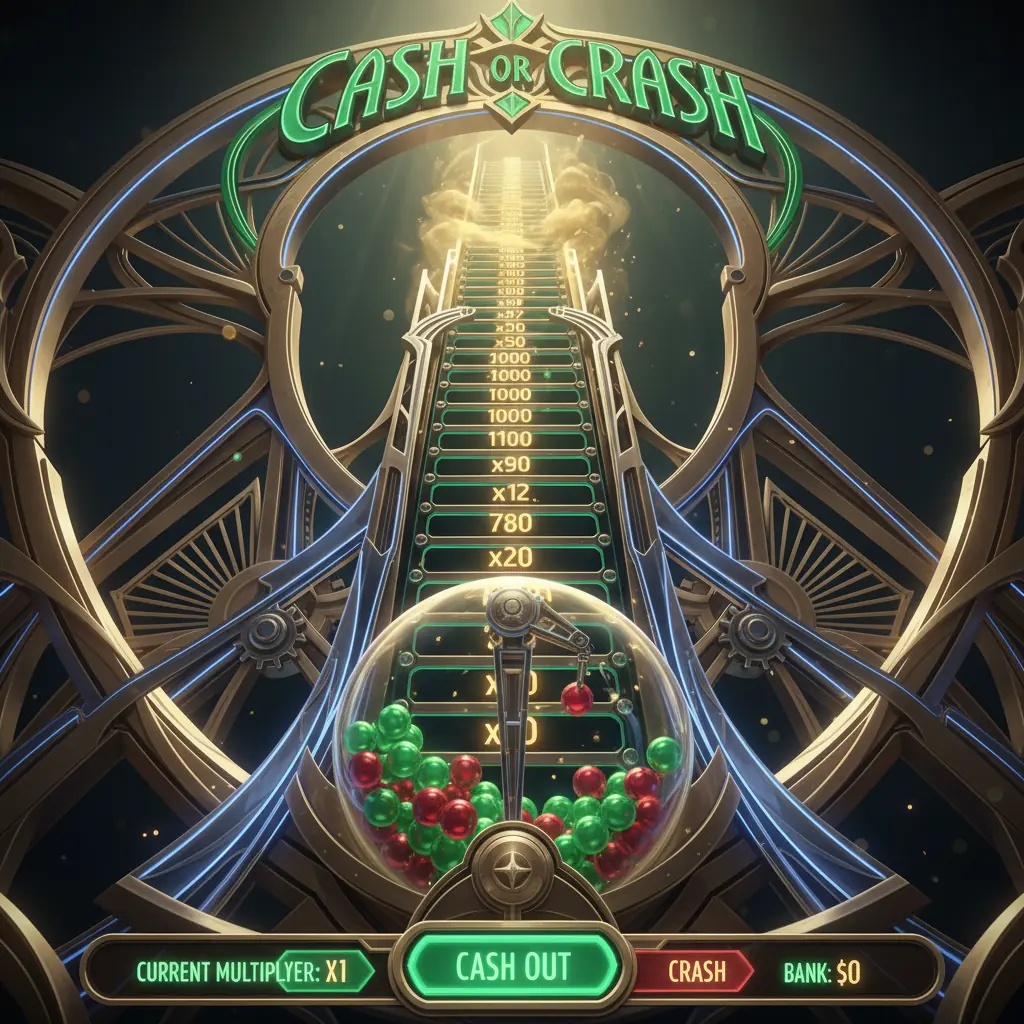
Get ready for a high-flying adventure with Cash or Crash, the live casino game that puts you in the pilot’s seat on a thrilling ride up a multiplier ladder! This isn’t your average casino game; Cash or Crash combines simple gameplay with the potential for massive rewards, making it a favorite among online gambling enthusiasts. The core concept is easy to grasp: the higher you climb, the bigger your payout. Each round presents a new opportunity to test your nerve and strategy. Players quickly find themselves drawn to the game’s fast-paced action and the tantalizing prospect of reaching the top of the ladder. With each decision, the tension rises. Also, the game offers a chance to develop strategies that fits to each personal preferences.
Understanding the Cash or Crash Ladder
The Cash or Crash ladder is the heart of the game, a towering structure filled with potential rewards, but also lurking risks. This ladder visually represents the multipliers you can achieve as you play. Each step upwards signifies a greater payout if you choose to cash out at that level. The further you climb, the bigger the potential win, but the risk of crashing also increases.
The key to understanding the ladder lies in the balls drawn during the game. Green balls are your friend; they propel you higher, increasing your multiplier. Red balls are your enemy, threatening to end your game. And then there’s the elusive gold ball, a game-changer that offers both protection and an enhanced payout.
Each level of the ladder offers a different multiplier. Initially, the multipliers increase rapidly, but as you ascend, the increase becomes smaller. This design encourages players to consider cashing out at lower levels to secure a guaranteed profit or to risk it all for the chance of a massive win at the top.
The Green Ball: Climbing Higher
The green ball is your ticket to climbing the Cash or Crash ladder. Each green ball drawn allows you to advance to the next level, increasing your potential payout. However, it’s crucial to note that the multiplier increases at a decreasing rate as you go higher. This means the initial green balls offer a more significant boost compared to those drawn at higher levels. This mechanic introduces a strategic element, prompting players to evaluate whether the risk of continuing is worth the incrementally smaller reward increase.
The Red Ball: Game Over
The red ball signifies immediate defeat. Drawing a red ball before obtaining a gold ball results in a crash, ending the current round and forfeiting any accumulated winnings. Each round is a gamble, and the appearance of a red ball emphasizes the inherent risk associated with the game. It’s a constant reminder that a single draw can wipe out your progress, urging players to weigh their options carefully and decide when to cash out.
The Gold Ball: A Shield and Boost
The gold ball is a coveted symbol of luck. Upon being drawn, it provides a one-time shield against the next red ball, effectively giving you an extra life. But the benefits don’t stop there. The gold ball also boosts your final payout if you choose to continue playing after its drawn. It remains active until your next collected red ball appears. This can significantly increase your winnings, making it a highly desirable outcome during gameplay.
Probability and the Ladder
Understanding the Odds
Navigating the Cash or Crash ladder hinges significantly on understanding probability. Each colored ball drawn alters the odds of your progression. Statistical analysis reveals the chances of climbing to higher levels diminish with each step. For instance, the probability of reaching level 10 is considerably lower than reaching level 5. A clear grasp of these odds is crucial for making informed decisions about when to cash out and secure your winnings. Tracking your progress and recognizing patterns can refine your understanding of how the game unfolds over time.
House Edge Impact
The house edge represents the inherent advantage the game has over the player. It doesn’t mean you’ll lose every game, but it does imply that over numerous rounds, the game is statistically more likely to yield a profit for the house. Understanding this effect is important for managing expectations and bankroll. While short-term profitability is possible, the house edge gently nudges the probabilities in its favor in the long flow of the game. Awareness of this edge encourages responsible game play.

Key Ladder Strategies
Navigating the thrilling landscape of Cash or Crash involves employing diverse ladder strategies, each presenting a unique balance between risk and potential reward. From cautiously conservative to boldly aggressive, understanding these approaches is crucial for informed decision-making. It’s important to remember that past performance doesn’t guarantee future success, and no strategy can completely eliminate the inherent risks involved. Effective risk management is key to protecting your bankroll.
Conservative Approach
The conservative approach prioritizes minimizing risk and securing consistent, albeit smaller, profits. This strategy focuses on making steady progress up the ladder, securing wins frequently and gradually accumulating wealth. By opting for lower multipliers, the volatility is reduced, offering a more secure path toward your financial goals. It’s steady wins versus risking it all for the allure of a larger return.
Aggressive Tactics
On the other end of the spectrum, aggressive tactics aim for the stars, characterized by high-risk endeavors and the pursuit of substantial payouts. While the potential for big wins is undeniably attractive, it’s essential to acknowledge the significant dangers involved. Pursuing large payouts demands a high-risk tolerance and the willingness to accept potential setbacks along the way.
Balanced Methods
For those seeking a middle ground, balanced methods offer a compelling blend of risk and reward, aiming for optimal outcomes through measured decision-making. This strategy is advantageous for players at all stake levels because the key is to grow consistently, whether you are betting low or high. This enables players to adapt to the game without exposing their entire bankroll.
Bankroll Management is Essential
Bankroll management stands as the unsung hero in the world of gambling, an essential ingredient in mitigating risk and extending playing time. It’s not about predicting wins, but rather, skillfully navigating the inevitable ups and downs. Solid bankroll management is arguably the most crucial element for anyone looking to enjoy gambling responsibly. It transforms the experience from a reckless gamble into a calculated pastime. Without it, even the luckiest streak can vanish in an instant. It boils down to one core tenet: only gamble with what you can comfortably afford to lose, allowing you to embrace the thrill without jeopardizing your financial well-being. Think of it as the guardrails on a winding road, keeping you safe from veering off course. Mastering bankroll management involves a blend of art and science; strategic budgeting, disciplined tracking, and honest self-assessment. Implementing tactics, such as win/loss limits and carefully considering bet sizes are not merely suggestions but foundational pillars of responsible gambling. Failing to manage your bankroll is akin to sailing a ship without a rudder; you might catch some favorable winds, but you’ll eventually crash against the rocks.
Setting Limits
Setting win and loss limits is a cornerstone of responsible gambling. Before even placing the first bet, decide on set points at which you will either quit while you’re ahead, or cut your losses before they become unsustainable. These limits act as your personal emergency brake, preventing you from chasing losses or getting overconfident. It’s important to define your limits clearly and stick to them without exception. It’s about controlling expenditure and knowing when to call it a day.
Appropriate Bet Sizing
Appropriate bet sizing is another vital element of bankroll management. Players should carefully select and tailor their bet sizes based on the size of their bankroll and their risk tolerance. A sensible betting scale will see wagers adjusted according to the available funds and taking into account the inherent risks involved. Avoid the temptation to make impusive large bets, which can swiftly deplete your resources. The aim is to prolong your playing time and to give yourself the opportunity to ride out the inevitable losing streaks. A good risk assessment is paramount.
The Psychological Element of Cashing Out
Deciding when to cash out is not just a mathematical equation; it’s a psychological battleground. Emotions like fear and greed can cloud judgment, leading to suboptimal decisions. Understanding these psychological influences is crucial for developing a sound cash out strategy. Overcoming the fear of missing out (FOMO) and loss aversion requires emotional control and a clear, pre-defined plan. Recognizing the power of the mind allows one to navigate the unpredictable waves of chance with greater confidence and rationality, avoiding common pitfalls that can derail even the most promising ventures.
Avoiding Fear and Greed
Maintaining emotional balance is paramount. Fear can cause premature exits, while greed can lead to holding on for too long. Cultivating impulse discipline helps in sticking to a pre-determined strategy, preventing emotional responses from dictating actions. Focusing on rational decisions, based on calculated probabilities rather than gut feelings, is the key to consistent, successful outcomes.
Recognizing Cognitive Bias
Cognitive biases significantly influence decision-making. Being aware of these cognitive influences, such as the gambler’s fallacy or confirmation bias, is crucial. Recognizing these decision traps allows one to make more predictive and efficient choices. Counteracting these biases involves critical thinking and a willingness to challenge one’s own assumptions, leading to more informed and objective choices.

Advanced Strategies and Tactics
Creating a Personalized Strategy
Crafting effective Cash or Crash strategies involves intertwining disciplined bankroll management with an understanding of probable outcomes, ultimately creating customized approaches based on individual player profiles. It’s about finding the sweet spot where risk tolerance meets potential reward.
The core of a personalized Cash or Crash strategy lies in aligning gameplay with individual risk appetite and financial capacity. Whether you favor a high-risk, high-reward approach, a balanced play style, or a more moderate risk strategy, bankroll management is crucial. Each approach necessitates a tailored bankroll management plan, acknowledging individual playing habits and financial constraints. Risk needs to be assessed so you can make a decision how much risk to take. There is no optimal strategy that guarantees profits.
Conclusion
In conclusion, mastering Cash or Crash involves a blend of strategic gameplay, disciplined risk management, and a keen understanding of probabilities. While no strategy guarantees wins, employing techniques like setting stop-loss limits, understanding optimal cash-out points, and adapting to the game’s volatility can significantly improve a player’s chances. The excitement of Cash or Crash lies in its inherent risk, but it’s crucial to approach the game responsibly. Remember that gambling should be entertaining, and it’s essential to be aware of the risks involved. Making informed decisions and setting personal limits are key components of responsible play. If you or someone you know is struggling with gambling, resources are available to provide support and guidance. Prioritize responsible gambling practices above all else.